Big Boy’s on a big roll

By Noah Lopez
Knightly News Reporter
There are trains, and then there is Big Boy.
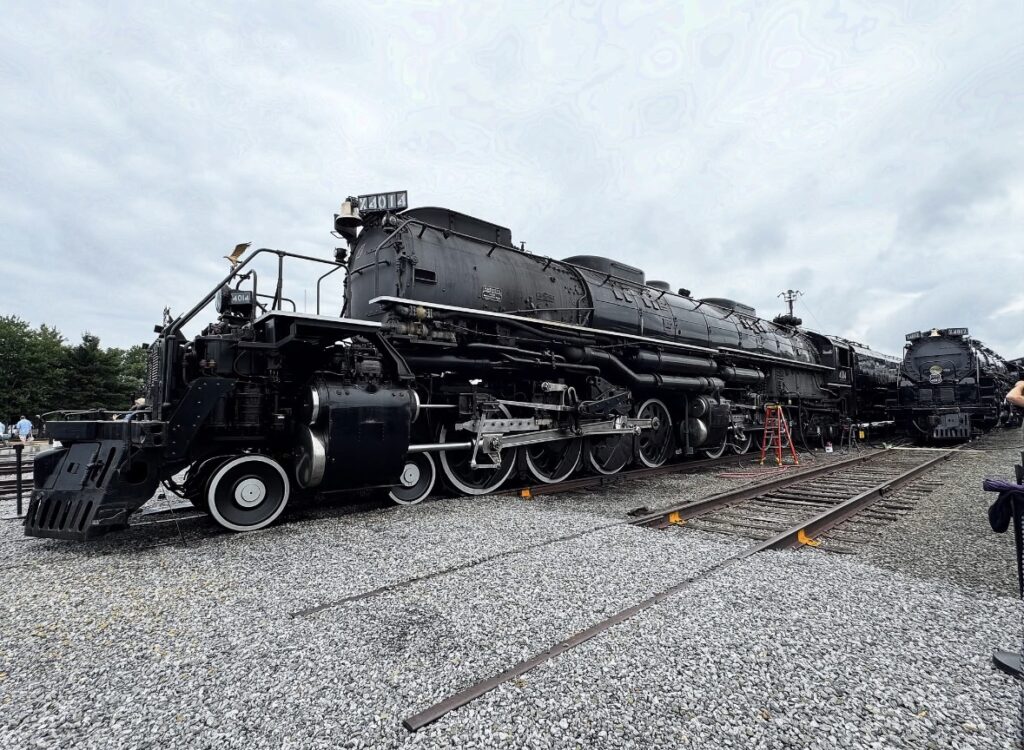
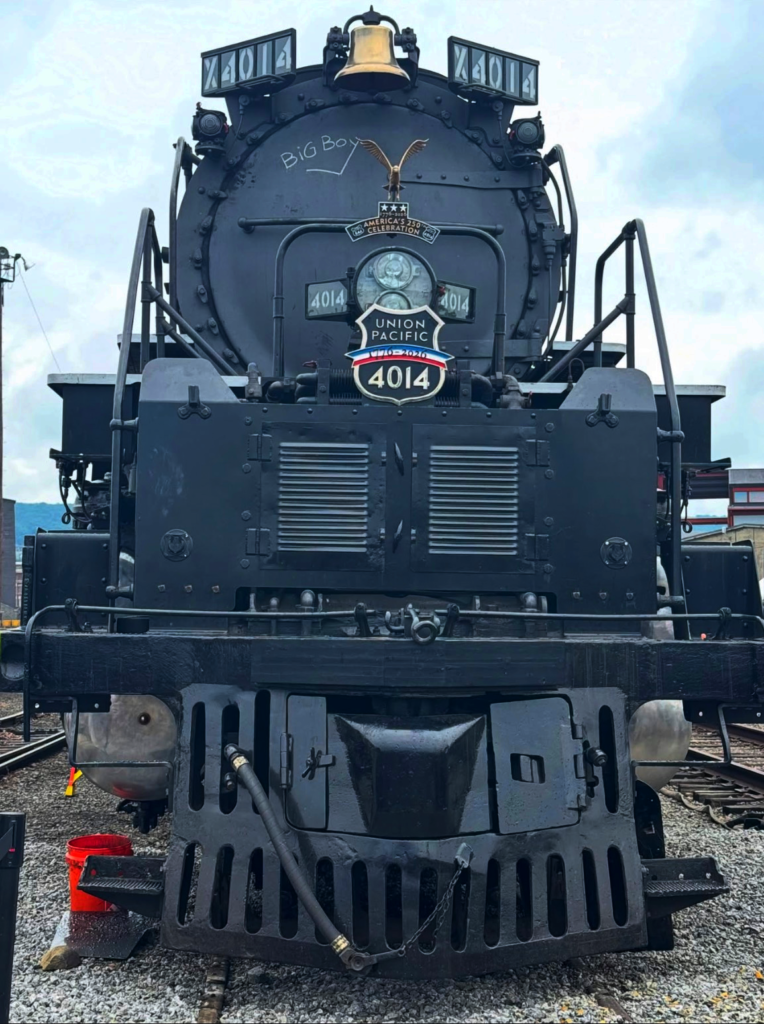
Stretching nearly 133 feet long and weighing almost 1.2 million pounds with its tender, Union Pacific’s Big Boy No. 4014 isn’t just another steam locomotive. According to Union Pacific, it is the world’s largest operating steam locomotive and one of only eight surviving Big Boy locomotives ever built.
Now, more than 80 years after it first entered service, the massive steam locomotive is once again traveling the country as part of Union Pacific’s America250 Tour, celebrating the nation’s 250th anniversary.
This summer, that journey has brought Big Boy through several Pennsylvania communities, including Harrisburg and Enola, where one of America’s most recognizable steam locomotives will pass through one of the country’s most historic railroad towns.
For many, it will be their first chance to see Big Boy in person. For others, it will be another opportunity to witness a piece of American history still doing exactly what it was built to do.
Built for a job
Big Boy wasn’t built to become famous. It was built because Union Pacific needed something bigger.
Built from 1941 to 1944 by the American Locomotive Company (ALCO), Big Boy was designed to haul massive freight trains over the steep grades of Wyoming and Utah without requiring helper engines. At nearly 133 feet long, it became the largest steam locomotive ever placed into regular service.
Union Pacific says the fleet hauled freight throughout World War II before retiring as diesel locomotives took over. Of the 25 locomotives built, only eight survive today, and No. 4014 is the only one still operating under its own power.
Decades after hauling freight across the West, Big Boy now serves as one of the most recognizable symbols of American railroading.
Back on the rails
After retiring in 1961, No. 4014 spent more than 50 years on display at the RailGiants Train Museum in California before Union Pacific reacquired it in 2013.
Trains Magazine reports restoration began in 2016 and required crews to rebuild major mechanical systems while preserving the locomotive’s historic character. Following a five-year restoration, Big Boy returned to service in 2019 and has since traveled thousands of miles across the country, drawing crowds everywhere it goes.
Each excursion still requires extensive planning, from route inspections to scheduled maintenance and water stops, making every trip a coordinated effort long before the locomotive leaves the shop.
Stops in Pennsylvania
Union Pacific says the America250 Tour highlights the railroad’s role in American history while celebrating the nation’s upcoming 250th anniversary, with Pennsylvania being a fitting destination. Few states have influenced American railroading more, with trains carrying coal, steel, manufactured goods and passengers across the commonwealth for generations.
Tom McCurdy, a member of the board of directors for the West Shore Historical Society, said railroads once connected nearly every part of everyday life.
“The railroad was very important as a way to get the milk from the farm to the dairy,” McCurdy said. “The railroad was the way to travel.”
The tour includes stops in Scranton, Reading, Philadelphia, Altoona and Enola. Pennsylvania has another connection to Big Boy through Steamtown National Historic Site in Scranton, where Big Boy No. 4012 remains on permanent display.
But while No. 4012 sits in a museum, No. 4014 continues making history on the rails.
Why Enola matters
For Central Pennsylvania, Big Boy’s visit carries even greater significance.
The Pennsylvania Railroad Technical & Historical Society says Enola Yard opened in 1905 and eventually became the largest freight classification yard in the world during the late 1950s and early 1960s. While smaller today, it remains one of the region’s busiest freight yards.
Jim Leonard, executive director of the Historical Society of East Pennsboro., spent 38 years working at Enola Yard and said it continues to play a vital role in freight operations.
“They have to break down trains and create new trains out of all those cars that are coming in here because they might be going to different destinations,” Leonard said. “It’s very functional.”
Leonard said the yard also shaped generations of workers and families throughout Central Pennsylvania.
“There were thousands of men working in the yard back in the day,” he said. “There’s still probably a thousand men out there working different jobs, still providing a living for men and women.”
Just east of the yard sits another railroad landmark.
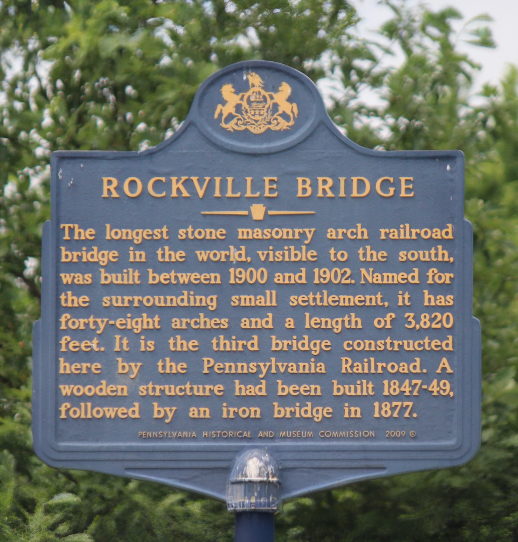
Rockville Bridge remains the longest stone-masonry arch railroad bridge in the world and continues carrying both freight and passenger trains across the Susquehanna River.
“A lot of people might think that it’s just a passenger train bridge,” Leonard said. “There’s more. I’d say it’s a split between freight and passenger going over that Rockville Bridge.”
Although Big Boy earned its reputation climbing mountains in the American West, its visit to Enola brings together two of the nation’s most significant railroad legacies: Union Pacific in the West and the Pennsylvania Railroad in the East.
McCurdy believes visits like this help preserve more than just a famous steam locomotive.
“We need to tell the story of what the railroad was and see what it is today,” he said. “There’s still a lot of railroad transportation today, but not really what it was then.”
For Leonard, that’s what makes Big Boy’s arrival so special.
“It’s really one of the last of the golden age of steam,” he said. “To be able to come over here on its way across the country, it’s going to be just a sight to see.”
Crossing the Rockville Bridge
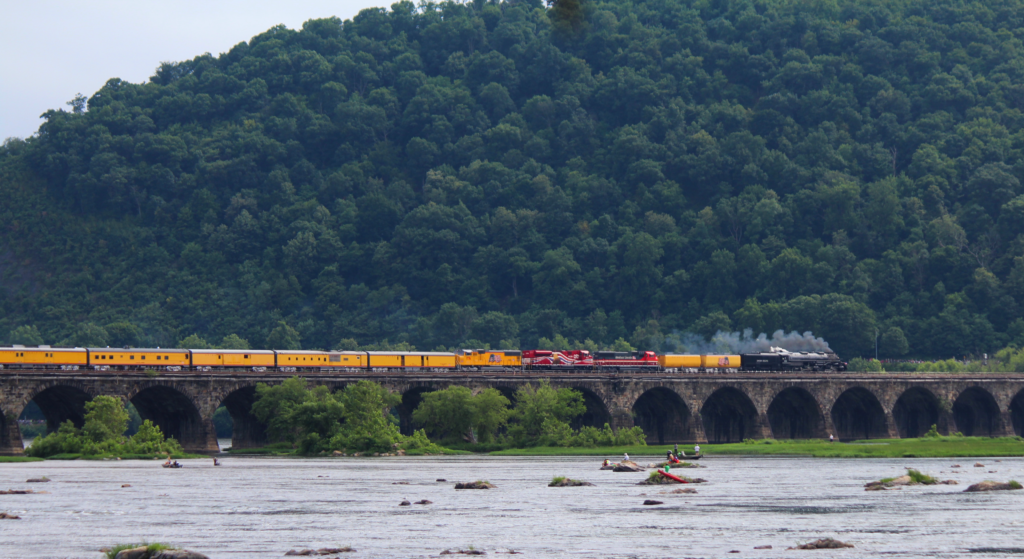
While Big Boy made several stops in Pennsylvania during its cross-country journey, its visit to the Harrisburg and Enola area was unlike any other. Thousands of rail enthusiasts lined North Front Street in Harrisburg and gathered at Fort Hunter Park to watch the historic locomotive cross the Rockville Bridge.
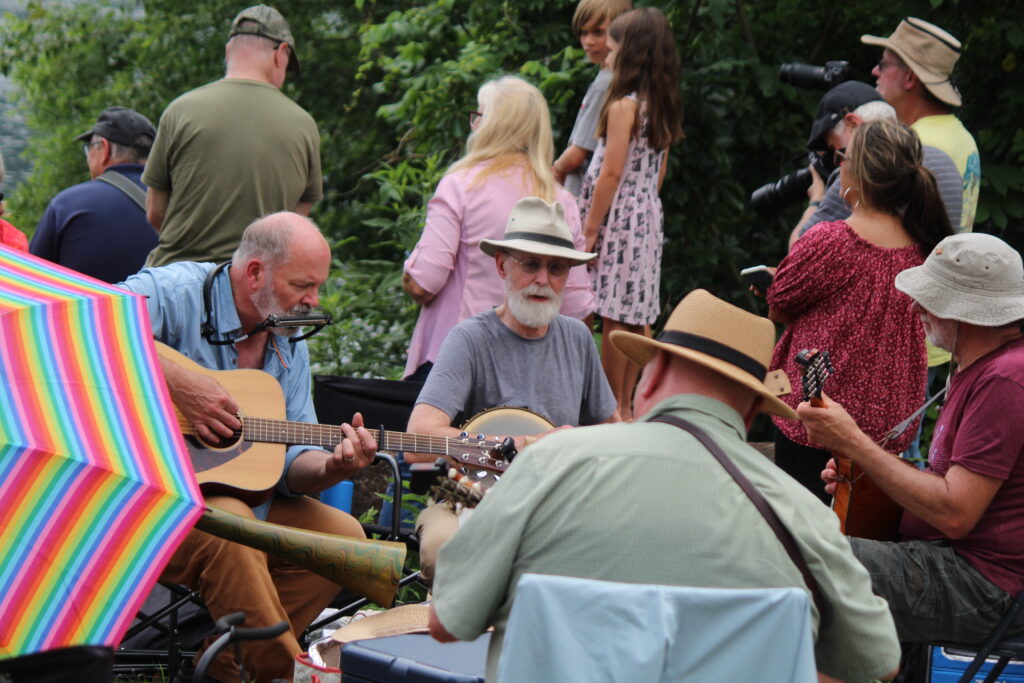
Among those waiting was Greg Geiss, a local photographer who came to document both the locomotive and a group of local musicians. The musicians, who regularly hold a Tuesday jam session, relocated their weekly performance to Fort Hunter Park to entertain the hundreds of railfans gathered throughout the day. Some spectators arrived as early as 6:30 a.m. to secure a viewing spot nearly 10 hours before the locomotive crossed the bridge just before 4 p.m.
“I’ve seen steam engines. I used to live in Scranton for a while, so I’ve been to Steamtown, but I’ve never seen this particular enormous, impressive engine of Big Boy,” Geiss said.
Another local resident, Kristen Giorgione, attended because of the historical significance of the event.
“This was just a great opportunity to see a historic train cross one of the most historic bridges in the country right here in our own backyard,” Giorgione said. “When else are you going to have this kind of opportunity?”
Giorgione also praised Union Pacific’s public relations efforts leading up to the locomotive’s cross-country journey, saying the railroad did an excellent job building excitement for the tour.
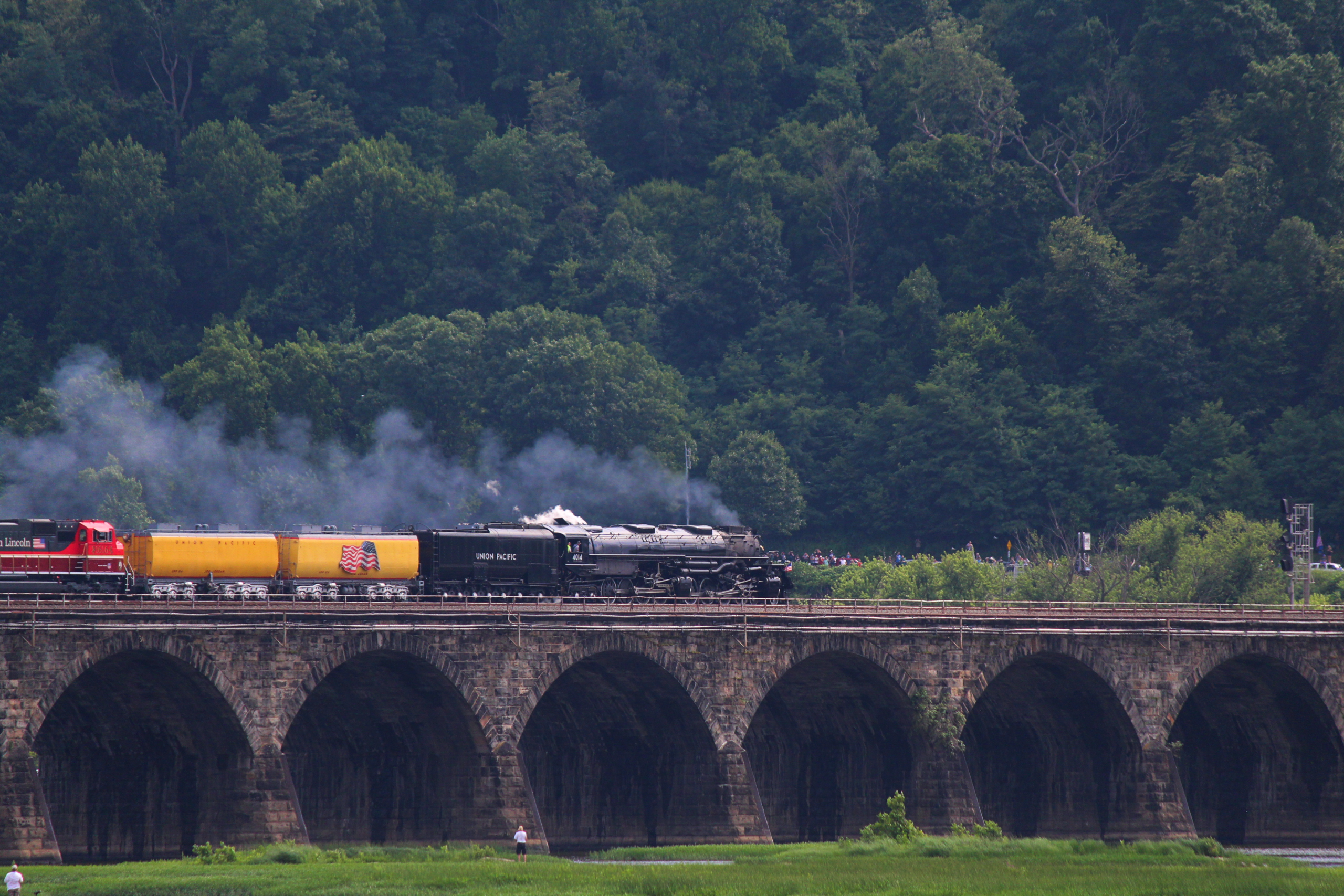
The locomotive took approximately five minutes to cross the Rockville Bridge before continuing to the Enola Railyard.
Later in the evening, hundreds more rail enthusiasts gathered in Enola for a closer look. Although the Union Pacific website noted there would be “no public access,” the locomotive came to a stop in the Enola Railyard along North Enola Road, which carries U.S. Routes 11 and 15 through East Pennsboro Township, allowing spectators to view and photograph it from nearby public areas.
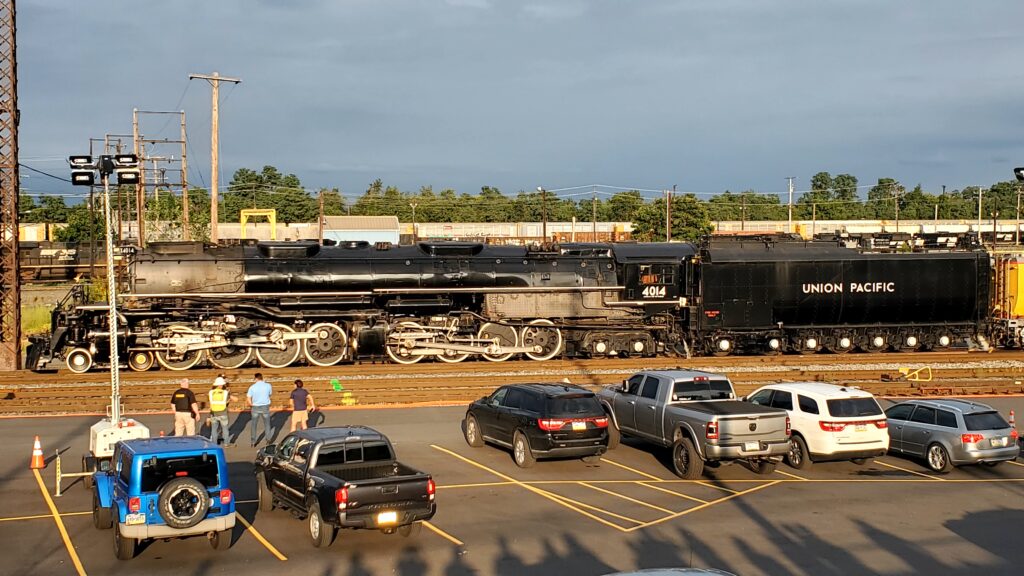
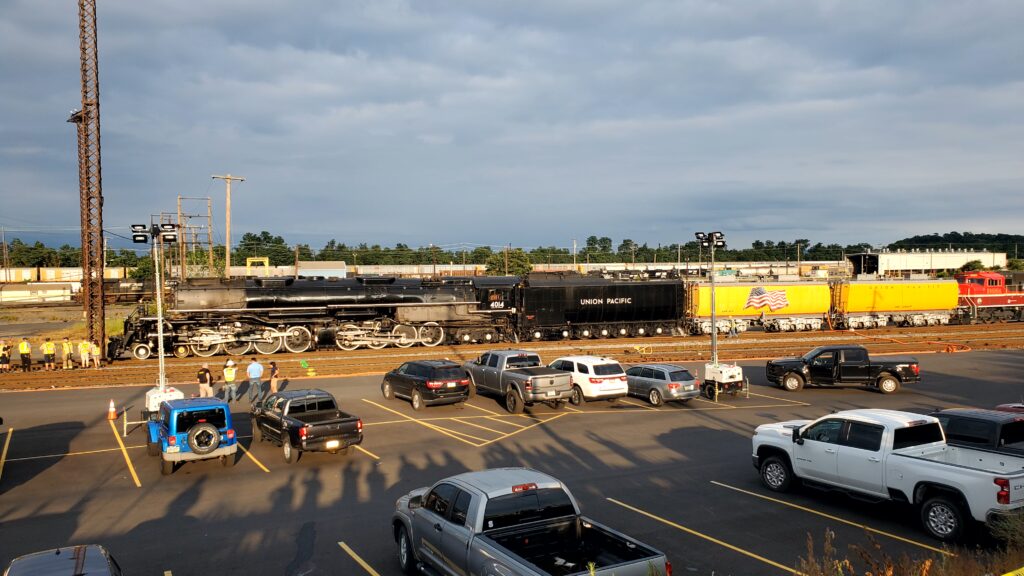
When asked why he traveled to Enola, Knightly News Hall of Famer Tyler Coleman said the opportunity was simply too significant to miss.
“I’ve always been a fan of trains,” Coleman said. “To see a Union Pacific train running on Norfolk Southern rails on the East Coast is history.”
Heading down the line
The tour of the midstate concluded Wednesday as Big Boy departed Enola for Altoona, where it will remain for the rest of the week before making its final Pennsylvania appearance Saturday as it travels through the legendary Horseshoe Curve on its way to Ohio.
Big Boy’s visit to Central Pennsylvania lasted only a short time, but the turnout along the tracks showed the locomotive’s lasting appeal. More than 80 years after it first entered service, the world’s largest operating steam locomotive continues to connect generations through a shared appreciation of history, engineering and American railroading.
Knightly News Co-Adviser Paul Miller contributed to the reporting on this piece.