The Paralympic Games
The event for athletes with disabilities
is another forum of sports stars

By Elijah Huhn
Knightly News Correspondent
Days after this year’s Winter Olympics ended in Italy, the host city, Milan Cortina (the city of Milan and the region of Cortina), transformed itself into the venue of the Paralympic Games.
What are the Paralympics?
The Paralympics are similar to the Olympics, usually held two weeks after the Olympics. Athletes from across the globe compete in events for medals and pride, but the Paralympics involve athletes with a range of disabilities. These athletes have shown that people with disabilities can succeed in sports.
But how did this event start, and what are the sports? And how did the recent Paralympics go?
History of the Paralympics
Athletes with disabilities competed in the Olympics far before the introduction of the Paralympics. In the first Paralympic Games, in 1904, German American gymnast George Eyser, who had a prosthetic leg, competed.
Forty years later, German neurologist Ludwig Guttmann, a Jew who fled the Nazi regime five years prior, established a spinal-injuries center at Stoke Mandeville Hospital, in England. In 1948, Guttmann opened the first Stoke Mandeville Games, which involved 16 British WWll veterans with spinal-cord injuries competing in archery. Guttmann aimed to create an elite sports program for people with disabilities that would be equivalent to the Olympics.
In 1960, the first Paralympics was held in Rome, which had hosted the Olympics a week before. It involved 400 athletes from 23 nations competing in 57 events across eight sports. Only athletes with spinal-cord injuries competed in these first Paralympics.
The first Winter Paralympics occurred in 1976, in the Swedish town of Ornskoldsvik. One hundred ninety-six athletes from 16 nations competed in 53 events across two sports, alpine skiing and cross-country skiing. Blind and limited-vision athletes, and athletes with amputees, competed.
The number of athletes, countries, events, sports and classifications at Summer and Winter Paralympics has expanded. The most decorated Paralympian of all time is Trischa Zorn, from Orange, California, who won a total of 55 medals (41 gold, nine silver and five bronze) in swimming, between the 1980 and 2004 Summer Paralympics.
Paralympic sports
Paralympics disabilities are situated in classifications. Athletes with one of the 10 established categories are divided in their category according to their level of disability in a functional classification system that differs from sport to sport.
The Paralympics have 10 categories:
- Impaired muscle power.
- Impaired passive range of movement (limited movement of joints).
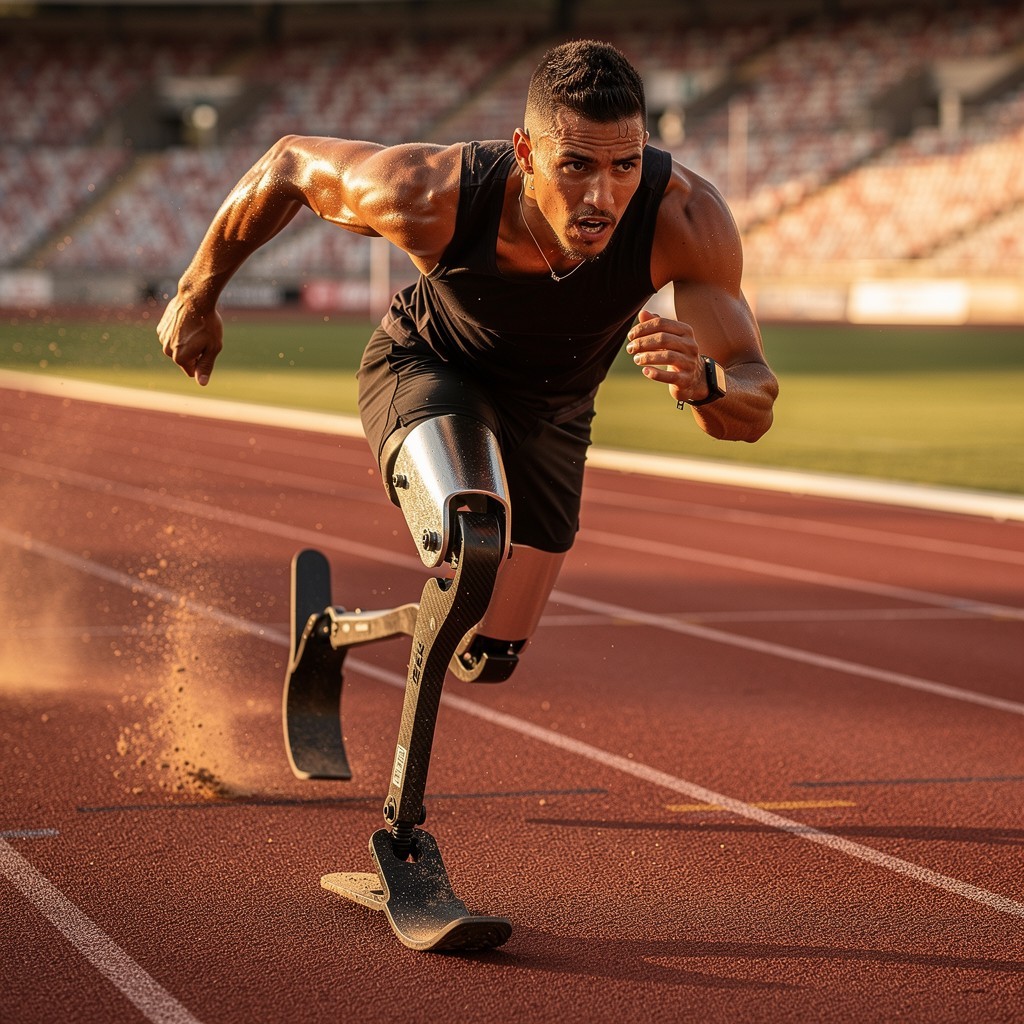
- Loss of limb or limb deficiency.
- Leg strength difference (significant leg-shortening).
- Short stature (short height from limbs or body).
- Hypertonia (excessive muscle tension or tone).
- Ataxia (inability to coordinate voluntary muscle movement, but no strength deficiency).
- Athetosis (slow movement).
The other two categories are visual and intellectual disability.
Any athlete with one or more disabilities can participate in some of the sports, though some athletes must complete in only one category. For example, five-per-side football and goalball, a sport exclusive to the Paralympics, features athletes with no or limited vision. In those two sports, a bell inside the ball helps players react to it.
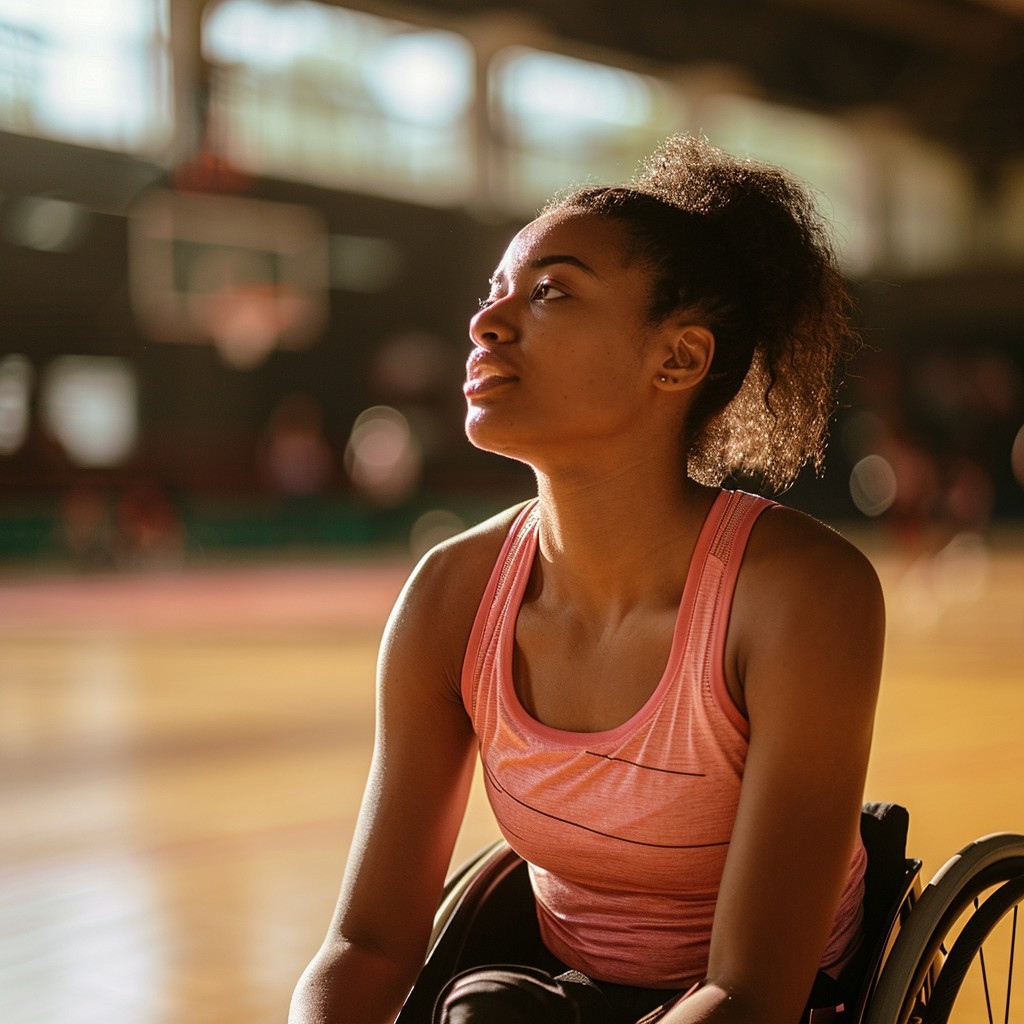
Boccia is another sport that is exclusive to the Paralympics. It is similar to bocce and involves athletes who have cerebral palsy. Boccia is one of a handful of events at the Paralympics that involves wheelchair athletes who have physical disabilities such as spinal-cord Injuries.
The Winter Paralympics has six sports. They follow:
Wheelchair basketball, wheelchair rugby and wheelchair curling are some of the most-notable examples of the Paralympic sports in which all athletes in those matches compete in wheelchairs.
- Wheelchair curling.
- Sledge ice hockey, which consists of athletes with physical disabilities in the lower part of their bodies.
- Snowboarding, which features the cross race and the banked slalom. In these events, athletes are divided into three classifications—SB-LL1 (more significant disability in one leg and SB-LL2 (less significant disability in one leg) and SB-UL (disabilities in at least one arm).
- Alpine skiing, biathlon and cross-country skiing, which have three main classes—limitations in sitting, standing or vision, in which the athlete is accompanied by a guide.
Results at the 2026 Winter Paralympics
The most recent winter games lasted from March 6 to 15, 2026.
These games included 612 athletes from 55 nations competing in 79 events across six sports.
China won the most medals, with 15 gold and 44 total.
The United States was next in medal counts, with 13 gold, five silver and six bronze.
Athletes who competed include Oksana Masters and Kendall Gretsch, who compete in Summer and Winter Paralympics.
Masters, born in Ukraine three years after the Chernobyl nuclear disaster, had several radiation-induced birth defects, such as tibial hemimelia (part or all of the shin bone missing). In the Summer Paralympics, she originally competed in rowing before switching to cycling. In the winter games, she competes in biathlon and in cross-country skiing. She won at least one medal in all four sports, with a total in competitions of 24 medals, 13 of them gold. In recent games, she won two golds in Paris, and four golds and one bronze in Milan Cortina.
Gretsch was born with spina bifida (incompletely closed spine) and competes in three paralympic sports. Like Masters, she competes in biathlon and cross-country skiing at the winter games. Unlike Masters, she competes in triathlon in the summer games. In the three sports, she won 11 total medals and five golds overall, a silver in Paris, and a gold, a silver and two bronze in Milan Cortina.
Jake Adicoff was the first openly gay male athlete to win individual gold in the history of Winter Paralympics. Adicoff competed in Italy. He won eight medals total, with give gold—four of them at the recent winter games. Adicoff is visually impaired athlete and was accompanied by a guide throughout the three Paralympics in which he has competed.
And the U.S. Men’s Sledge Ice Hockey Team claimed its fifth consecutive gold medal in the sport, a winning streak that has lasted since the Vancouver 2010 Paralympics.
Results and athletes of 2024 Summer Paralympics
The most recent summer games, held in Paris from Aug. 28 to Sept. 8, 2024, hosted 4,433 athletes from 170 countries competing in 549 events across 22 sports.
China won the most medals—94 gold, 220 total.
The United States won the 3rd-most amount golds, and a total of 105, with 36 gold, 42 silver and 27 bronze. Athletes ranged from those born with disabilities to army veterans to people who suffered through tragic events.
Tatyana McFadden and Jessica Long are two legends in their sports who were born in Russia. McFadden was born with spina bifida, which paralyzed her from the waist down. She competes in the T54 category of track and field athletics, where she uses a wheelchair and races by using her arms to move the chair.
Long’s legs were amputated when she was 18, because of fibular hemimelia. She competes in the S8, SB7 and SM8 categories in swimming.
Throughout their careers, McFadden and Long have won 21 medals (eight gold overall, and a silver and bronze in Paris) while Long has won 31 medals (18 gold overall, with two in Paris).
Matt Stutzman, who competes in archery, was born without arms. Stutzman uses his legs and feet to launch arrows. He won the gold in the individual compound event in Paris, 12 years after winning his first medal, a silver.
Jason Tabansky also competed in archery. Tabansky is an Army veteran who served for more than 15 years. He won gold in the men’s individual W1 event.
And Ali Truwit, who lost a leg in a shark attack while snorkeling, competed in the Paris games and won two silver medals in swimming.
The next Paralympic Games will be held in Los Angeles—a first for the nation’s second-largest city—in August 2028.
For more information on the Paralympics, visit https://www.paralympic.org.
Comment of story idea? Contact [email protected].
Edited by media-club co-adviser and this blog’s editor, Professor Michael Lear-Olimpi.