On patrol with public safety officers
CPC’s Public Safety and Health Dept.
never closes, and offers many benefits

By Leo Blocher
Knightly News Reporter
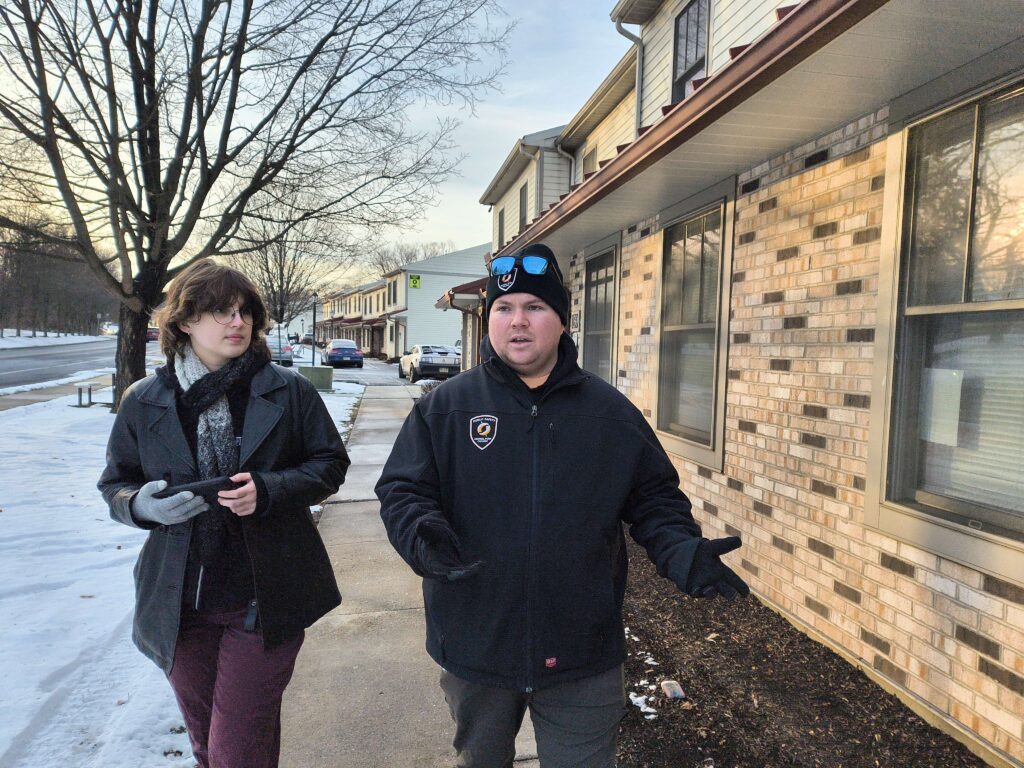
I walked a couple of daytime shifts last year with Central Penn Public Safety and Health Department Officer Trevor Mrakovich to get a close-up view of what the college’s security team does.
The tours encompassed the entire campus, from the historic Boyer House on its east end, around the Advanced Technology Education Center (ATEC) that fronts Valley Road and B Street, to the Stabler Health Sciences Building and the Surgical Technology Education Center on the west end of campus, and buildings and pathways in between.
Mrakovich has worked on and off with the department for about three years. During the patrols, he recognized every student we encountered and greeted each by name.
“I think now more so than ever, our relationships with the campus community are outstanding,” Mrakovich said. “We pretty much know everybody on a first-name basis, and if we might not know that person, we make an effort to get to know them. So, we have that grassroots approach.”
Department overview
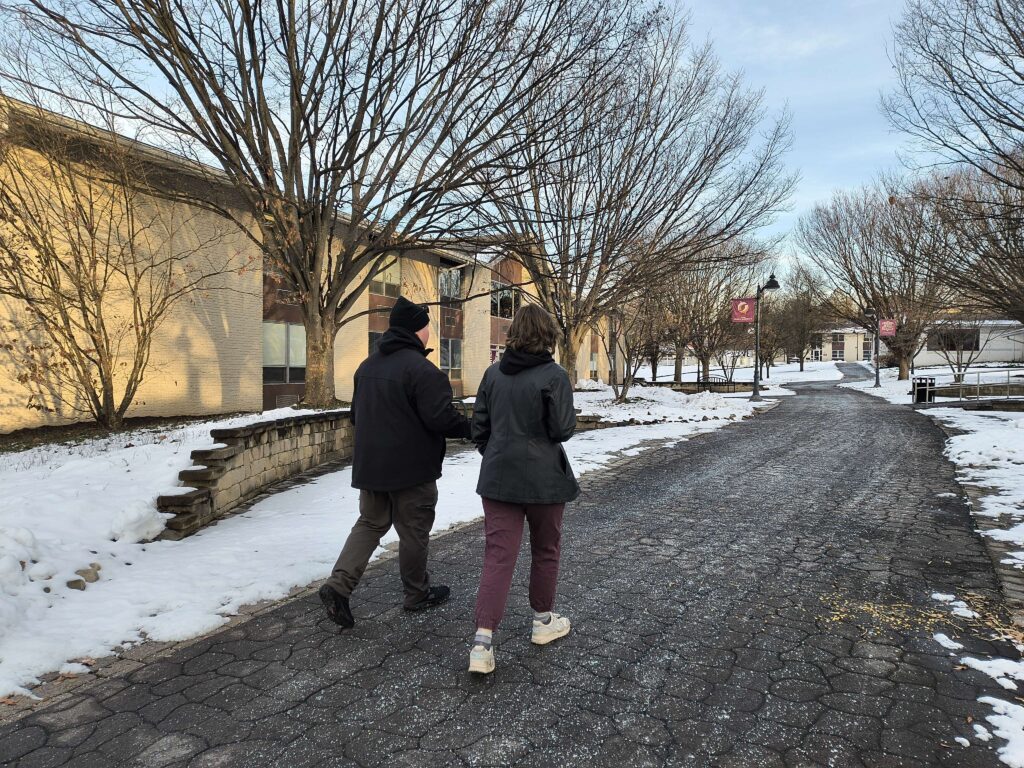
Central Penn’s Public Safety and Health Department is active 24 hours, seven days a week, year-round. At least one officer works per shift, with overlap during the busier afternoon hours. Officers provide daytime and overnight coverage, taking multiple patrols a day. At night, officers patrol the suites alongside resident assistants.
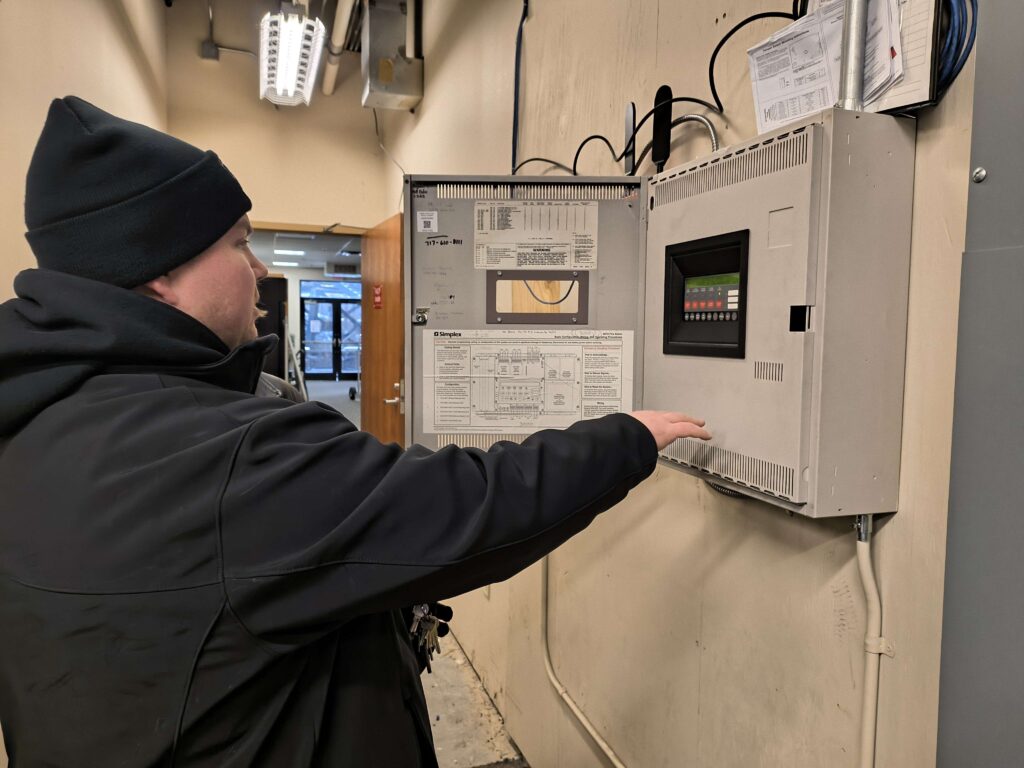
On these patrols, officers are not only on the lookout for potential danger but also check doors and safety equipment such as fire extinguishers to ensure they are ready in case of an emergency. They also verify that all safety messaging around campus is up-to-date.
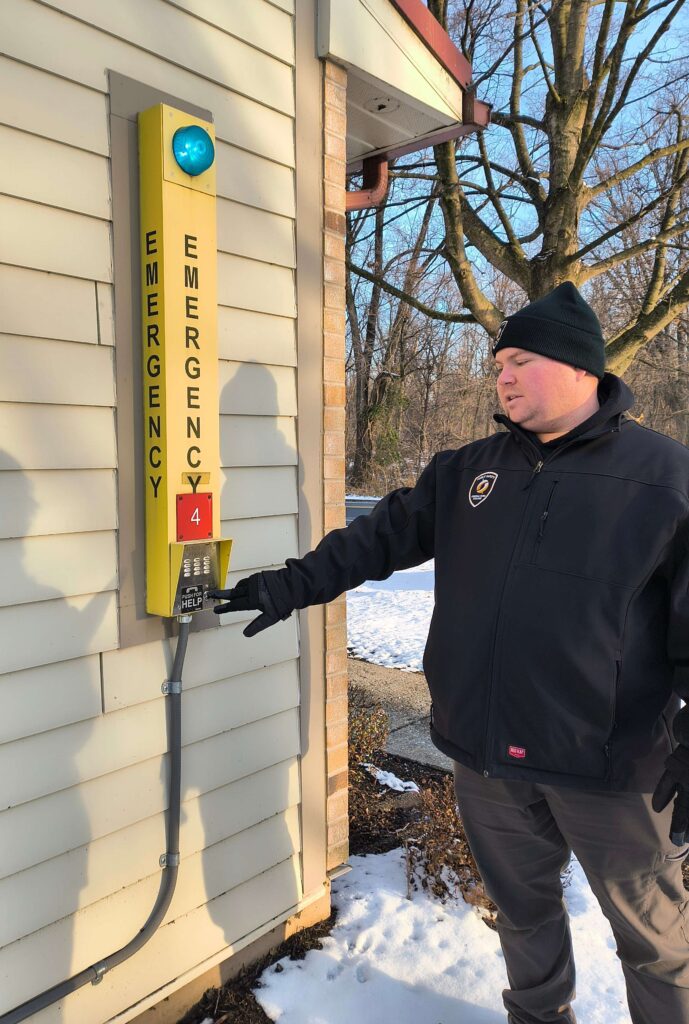
“I always say our boots are on the ground, they’re in the trenches,” Mrakovich said. “So, they’re, you know, in our academic buildings, in our classrooms. We’re on campus doing different things.”
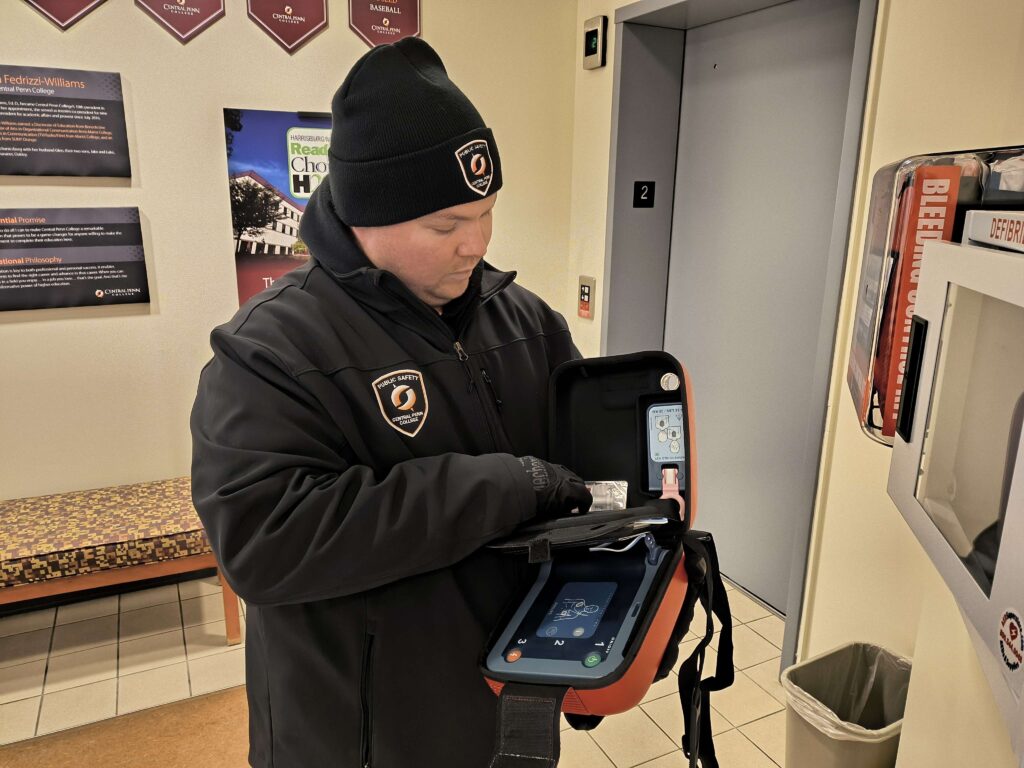
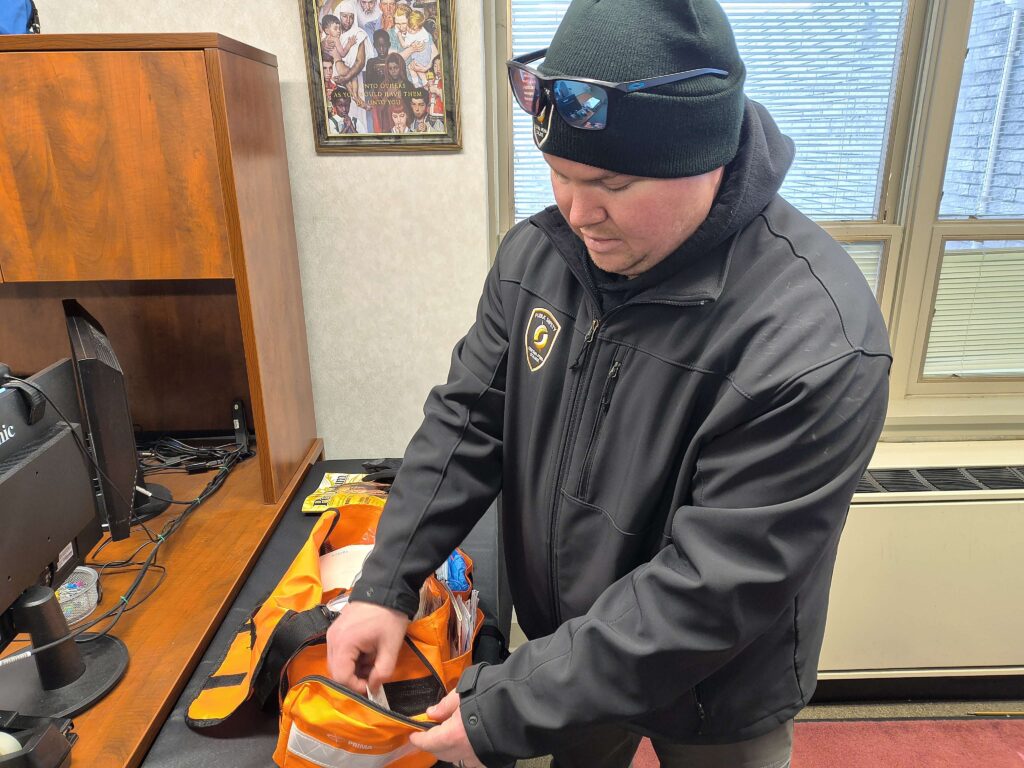
Public safety officers are fully trained in first aid, CPR (cardiopulmonary resuscitation), how to use an AED (automated external defibrillator), how to treat hypothermia and how to perform the Heimlich maneuver, the last to help people who are choking because of something stuck in their throat that is obstructing breathing. Central Penn public safety officers are the first responders for on-campus emergencies.
Officers also receive FEMA (Federal Emergency Management Agency) and defensive-weapons training, which Mrakovich teaches on campus. They learn how to use pepper spray and handcuffs. The officers are trained every three years.
The public safety officers monitor campus safety remotely, too, using about 100 cameras placed around the college grounds.
But that’s not all that officers of the Public Safety and Health Department have to offer Central Penn students and employees.
“I think, unfortunately, a misconception of campus security in general is they’re just a bunch of guys that want to watch cameras or hide in bushes and jump out and say, ‘Oh, that’s a policy infraction,’” Mrakovich said. “But those days are long gone. I mean, we’re more so…here for the students. We’re here for the campus community, the faculty and staff.”
Hands-on duties
Over the last few years, the approach to public safety on campus has changed from immediate punitive measures to a more understanding, measured and helpful approach.
Mrakovich said the department is a resource for students. He spoke of the common infraction where a student doesn’t pay for food at the Will’s Place student lounge, next to the Knight & Day Café, on ATEC’s the lower level. Most of the time, that’s a technology mistake, such as with the cash-register scanner, or a mistake a student made. The officers help in other ways, too.
“Students who live here on campus throughout the year and don’t usually go home on the weekend, they might not have anything at their place, so they just need the food,” he said. “So, we’ve helped them with that. If that happens, I’d usually just go to the food pantry and, you know, make a list of what they picked out, and I’d send it to Lindsay Garber (the college’s associate vice president of operations and director of student housing and residence life, who oversees the Public Safety Department).”
Asked about any time Public Safety might have to interact with the East Pennsboro Township Police Department, Mrakovich said the office has a positive and close relationship with the police.
“We maintain good ties with them,” Mrakovich said. “I think we’re pretty much at this point on a first-name basis with the police department and fire department. We’re very close with them as well. Their fire chief has come to campus a few times to look at different things.”
Mrakovich shared an instance of when there was a gas leak that required the student suites to be evacuated. Public Safety’s close working relationship with the township fire department allowed a perfect coordinated response.
“Typically, when we’re dealing with incidents in-house, we can handle them,” he said. “We’re the incident commander. We’re dictating what things happen. When the fire department shows up, they’re taking over, so they’re directing us on what to do, but, thankfully, we had such good rapport with them we were able to respond quickly—almost nonverbally—because we kind of understood what needed to happen because of our prior experience.”
More than patrols
As the seasons change, Central Penn’s public safety officers work to ensure campus safety by arranging to have trees trimmed back, walkways salted and snow removed.
“Usually if there is a major storm, the meetings director will call and actually ask us what the conditions are like, since we’re here 24-7,” Mrakovich said. “We’re gonna tell them, ‘Hey it’s really bad: There’s like six inches of snow out here,’ and they’re going to come out and start doing snow removal and put salt down and treat the walkways and roads…because we want to make sure anyone who’s living here can traverse safely.”
The department offers anonymous reporting, safety escorts, wellness checks, vehicle assistance and emergency notifications, and runs a lost-and-found, and offers programs on safety and information about campus security. The office is in Bollinger Hall, Room 46. The phone number is (717) 728-2364.
Comment or story idea? Contact [email protected].
Edited by media-club co-adviser and editor of this blog, Professor Michael Lear-Olimpi.