
CPC students and The Big Beautiful Bill
How the law has changed
federal loan borrowing & repayment

By Leo Blocher
Knightly News Reporter

Federal-spending legislation that went into effect on July 1 has changed how financial aid and repayment work for college students who receive federal loans, but what does that mean for Central Penn students?
Key changes
The law – the One Big Beautiful Bill Act, commonly known as The Big Beautiful Bill – caps Parent PLUS loans taken before July 1 at a maximum of $20,000 per academic year (three terms at Central Penn) and at a maximum of $65,000 per dependent student, a significant reduction.
Parent PLUS borrowers who borrowed in the 2025-2026 school – prior to July 1 this year – can continue with those previous limits for three years because the loans were “grandfathered” into limits in place before the law took effect.
Another change is elimination of GradPLUS loans for new borrowers pursuing graduate degrees, which will not have a wide impact on Central Penn, which offers only one graduate degree.
Also, the borrowing limit for any undergraduate student not considered full-time will now be prorated and annual maximum loan amounts may be reduced.

Effects at Central Penn
According to Financial Aid Director Kathy Shepard, these changes are unlikely to have much of an effect on Central Penn students, because the cost of the school’s only graduate program is low and because the college changed credit requirements for full-time status for students from 12 credits per term to eight credits per term to accommodate them under the law’s new requirements.
What about existing loan debt?
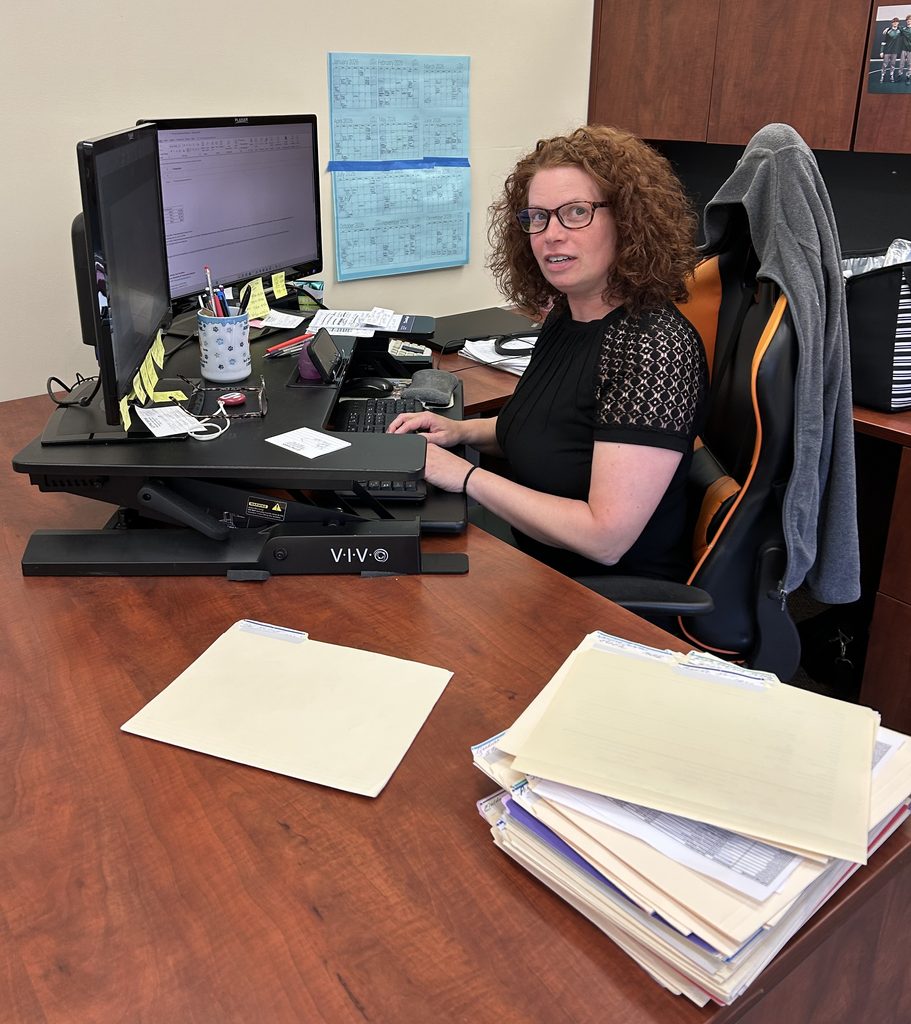
Photo by Michael Lear-Olimpi
Loans of students who borrowed before the law took effect will be “grandfathered” in, so the policy changes do not affect the loans, if students have borrowed without interruption.
“Now, if they withdraw or transfer out, then the law goes into effect for them,” Shepard said. “I had that conversation with a student who always takes the summer off.”
Shepard said scholarships should help ease the financial burden that a reduced borrowing amount may cause. She added that Central Penn has many scholarships to offer to qualified students enrolled in the college.
The new law also whittled repayment options for borrowers to two:
- The Repayment Assistance Plan (known as RAP) sets repayment rates at 1 percent to 10 percent, according to adjusted gross income.
- Tiered Standard Plan, for which payments are set according to a borrower’s loan balance, with repayment periods running from 10 to 25 years.
Standard, graduated, extended and income-based repayment (IBR) plans for loans taken prior to July 1 this year can continue if new loans are not taken.
Older plans, such as Saving on a Valuable Education (SAVE), Pay As You Earn (PAYE) and Income-Contingent Repayment (ICR), will be phased out by July 1, 2028.
Borrowers who had loans with outstanding balances before the new law was effective and who then obtain more loans must convert their repayment plans to one of the two new options.
Students with questions about financial aid and tuition costs can inquire at the financial aid office, in Bollinger Hall, Room 52.
The financial aid office can also be reached at [email protected] or at 1 (800) 759-2727.
Comment or story idea? Contact [email protected]. Edited by media-club co-adviser and Knightly News blog editor Professor Michael Lear-Olimpi, who contributed reporting to this story.