
A look at CPC’s OTA program
Another way the allied health
professions help people
By Jules Quare
Knightly News Reporter
Central Penn’s Occupational Therapy Assistant (OTA) Program is giving students a pathway into a healthcare field that focuses on helping people regain independence.
Program director Kimberly Tanish said she did not plan to be an occupational therapist, but her background in a family rooted in medicine made healthcare feel like a natural fit career fit. After exploring different options, she discovered occupational therapy through career research and shadowing experiences.
What stood out to her was the profession’s broader perspective on patient care.
“It’s very holistic,” Tanish said. “You’re not just looking at the physical body. You’re looking at the entire person (including) the mental health aspect and helping them be independent.”
An interest in teaching
Her experience in the field eventually led her into teaching. While working alongside an OTA who had graduated from Central Penn, she learned about an opportunity to become a professor and eventually made her way to teaching occupational therapy.
In the classroom, Tanish emphasizes experiential learning, a Central Penn learning pillar. She and those around her aim to give students as many real-world opportunities as possible, whether through volunteering or exposure to different patient populations.
Students in the program recently volunteered at events such as the Special Olympics and the Tim Tebow Foundation’s Night to Shine, a prom experience for people with special needs. The students have also worked with local nursing facilities, gaining firsthand experience interacting with patients in different settings.
“We’re always trying to get students out into the community,” Tanish said. “Whether it’s bringing in guest speakers or taking them to different environments, we want them to see what OT really is.”
The program operates with two cohorts a year. At times, the classes can be small, but that makes it easier to bond with their mentors, participants said. Especially with course work and lab lessons, students must become comfortable with one another, which facilitates hands-on work and learning.
“They’re with the same group the entire time,” she said. “They really learn to lean on each other.”
Helping others–a common goal in allied health
For Miriah Buck, the decision to pursue OTA came from a desire to help others and to be part of a career where she could see progress firsthand. As she has moved through the program, she said her understanding of the field has grown.
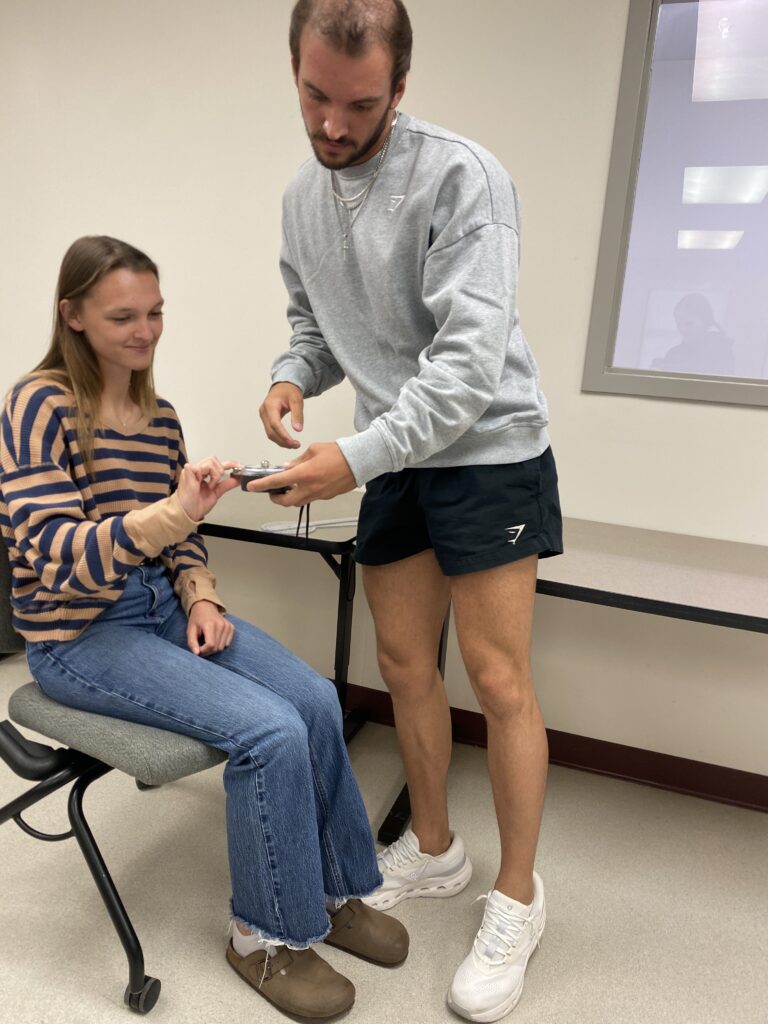
Photo by Jules Quare
“It’s easier going into every term knowing what to expect,” Buck said.
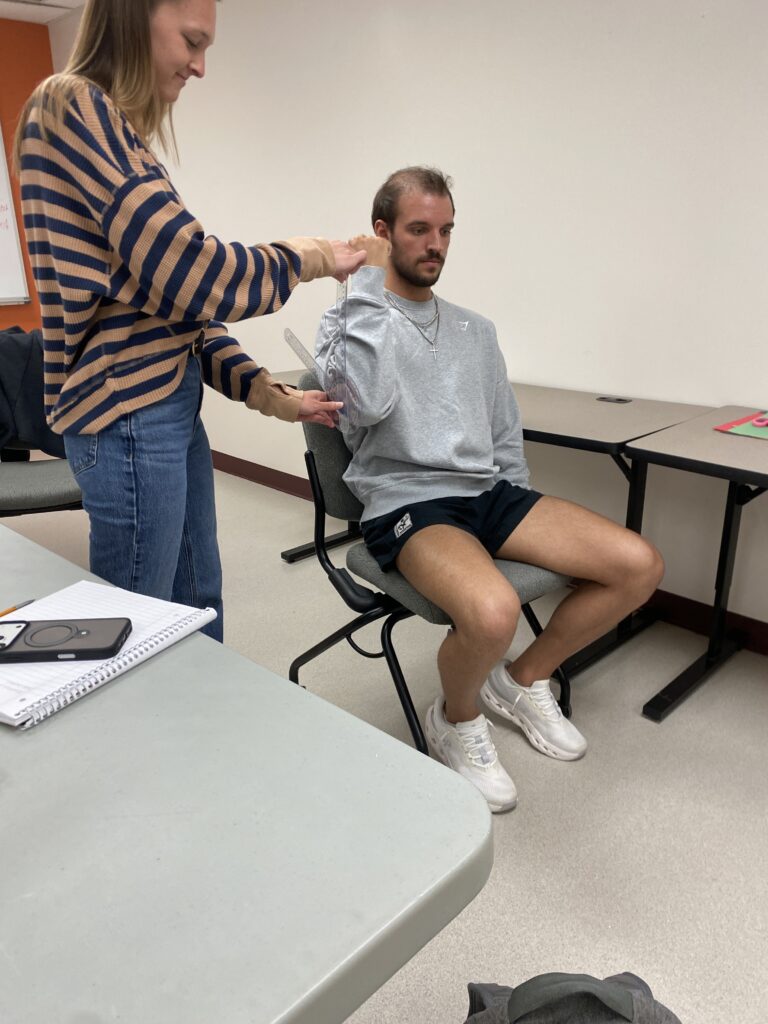
Buck also pointed to hands-on lab experiences as a highlight of the program. Learning how to take vital signs stood out to her, explaining that the deeper understandings are most appreciated when its you’ve experienced what you’re studying and doing.
Logan Follmer entered the program with a background in personal training and so was already familiar with helping people improve physically. He said, though, that occupational therapy offered a different level of impact.
“I’ve always liked helping people,” Follmer said, “but OT helps them in a different way than most occupations.”
Follmer said Central Penn’s location and reputation made it an appealing choice, though adjusting to school after time away presented challenges.
“You forget the responsibility and workload,” he said. “It takes time to get used to again.”
Balancing school, work and personal life has required strong time management, but Follmer said it is something he continues to improve.
Students in Central Penn’s OTA program say the combination of hands-on learning, supportive faculty and real-world experience is preparing them for meaningful careers. As they move through the program, many of them feel confident that they have chosen a path where they can make a lasting difference in people’s lives.
Quare is co-vice president of The Knightly News Media Club @ Central Penn College.
Comment or story idea? Contact [email protected].
Edited by media-club co-adviser, and this blog’s editor, Professor Michael Lear-Olimpi.